
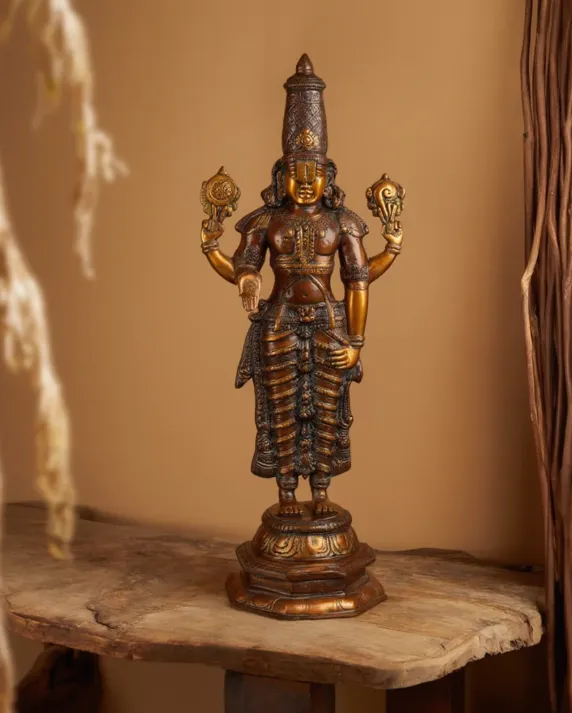
Most people searching for “home decor stuff” do not need more stuff. Indian homes are increasingly becoming warehouses of decorative purchases. One more vase. Three artificial plants. A Buddha head from an online sale. Random wall frames. A candle that nobody lights because it is “too pretty to use”.
Then comes the classic question: “Why does my house still not look put together?”
Because decoration is not about how much you add. It is about what actually changes the way a room looks, feels and functions. That distinction matters more now. Current Indian home decor content and market signals point towards warmer, more personal and practical interiors.
So, if you are shopping for home decor stuff, here is the opinion most generic decor blogs will not give you: Stop buying decorative objects first. Buy the pieces that organise the entire room.
And in a living room, few things do that better than the right living area rugs, lighting, textiles and one or two genuinely meaningful objects.
Start With What the Room Is Missing, Not What the Website Is Selling
The easiest way to waste money on home decor stuff is to shop without identifying the actual problem in your room. Before buying anything, stand at the entrance and ask one question: What feels incomplete here?
Usually, the answer falls into one of these categories:
- The room feels empty because there is no visual anchor.
- The room feels cold because every surface is hard and plain.
- The room feels busy because there are too many small objects.
- The room feels flat because there is no variation in texture.
- The room feels disconnected because the furniture does not visually belong together.
- The room feels generic because nothing reflects the people living in it.
This is why buying ten small decorative products rarely solves the problem.
The better approach
Choose one problem-solving category first:
- For a disconnected living room: add a rug.
- For a dull corner: add a floor lamp or a substantial plant.
- For a bare wall: choose one large artwork instead of five tiny frames.
- For a lifeless sofa: add texture through cushions or a throw.
- For visual clutter: remove things before buying anything new.
Home decor stuff should solve a visual problem, not simply arrive in a cardboard box.
Why Living Area Rugs Should Come Before Most Home Decor Stuff?
If your living room has a sofa, chairs and a centre table but still looks unfinished, the missing piece is often under your feet.
Living area handmade rugs do much more than decorate the floor. They create a visual boundary around the seating area and help individual furniture pieces read as one intentional arrangement. That is especially useful in Indian apartments where the living room often handles everything from daily family time to guests and festivals.
What a rug can do that ten showpieces cannot
- Anchor the furniture: The seating arrangement looks connected rather than scattered.
- Add texture: Particularly important in homes dominated by marble, tiles, glass and smooth furniture.
- Introduce colour without repainting: A handmade rug can bring warmth or contrast to a neutral room.
- Define zones: Useful in open layouts where the living and dining areas share one larger space.
- Add comfort: Hard flooring becomes visually and physically warmer.
The biggest Indian living room rug mistake
Buying a rug that is too small.
A small rug placed in the middle of a large seating arrangement often makes the room look smaller, not larger. For many living rooms, the front legs of the main seating should sit on the rug so the arrangement feels connected.
If your rug looks like an island that furniture is avoiding, it is probably too small.
That is why, when choosing handmade and thoughtfully designed options, brands such as Kesari Home can make more sense than treating a rug as another disposable decor purchase. A well-chosen floor piece often changes the room more than a basket full of random accessories.
The Indian Rule for Buying Home Decor Stuff: Think About Maintenance Before Aesthetics
The best-looking product is useless if it becomes annoying to clean, store or live with. Indian homes deal with dust, humidity, monsoon weather, high foot traffic and frequent cleaning. A beautiful white object with impossible-to-clean grooves may look excellent online and terrible after three months.
The same applies to living room rugs.
Before buying, ask:
- Will this material suit the amount of foot traffic?
- Can I clean it realistically?
- Will the colour hide or reveal everyday dust?
- Does the size work with my furniture?
- Will I still like this after the current trend passes?
- Is this a decorative purchase or a long-term piece?
Current 2026 home decor coverage also reflects a stronger focus on practical living, adaptability and meaningful materials rather than decoration for decoration’s sake.
A simple buying formula
Big impact + daily usability + long-term relevance = good home décor purchase.
Everything else deserves a little suspicion.
What Home Decor Stuff Should You Actually Buy First?
If you are starting from scratch, prioritise your budget in this order:
- Living area rug to anchor the room.
- Good lighting to improve mood and depth.
- Curtains and textiles to soften the space.
- One substantial wall piece instead of many tiny ones.
- A few personal or handmade home decor stuff with real character.
- Plants or natural elements where they genuinely suit the light and space.
The point is not to create a showroom. The point is to create a room that feels complete when you walk into it.
Because the best home decor stuff is rarely the stuff you notice individually. It is the combination of pieces that makes you stop noticing the room altogether and simply enjoy being in it. And honestly, that is where good decorating begins.