
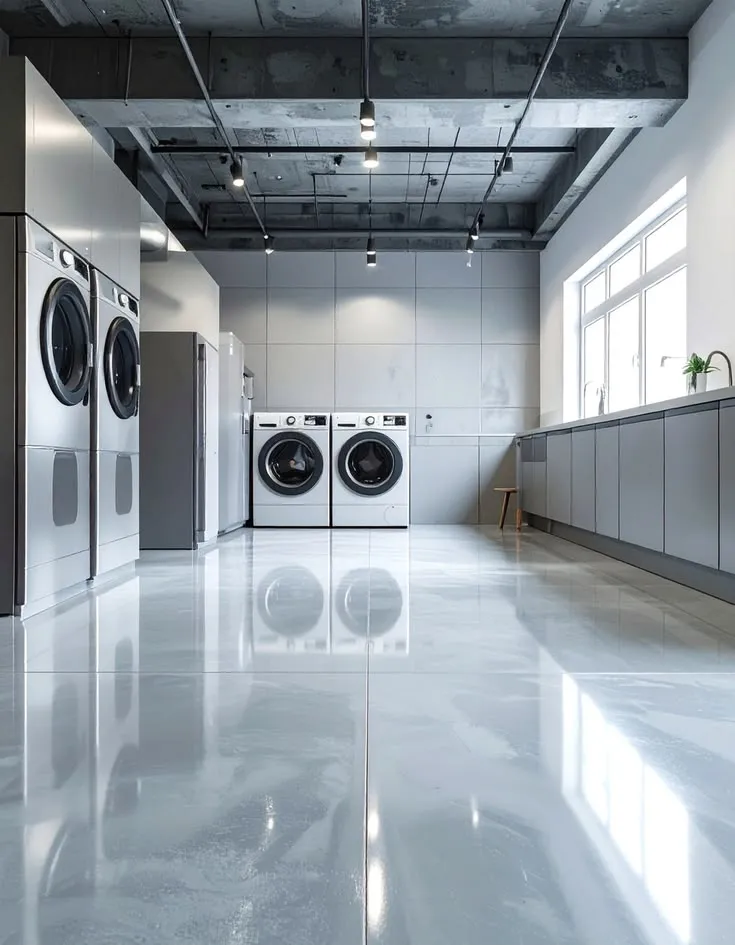
Laundry rooms handle far more activity than their size suggests. Washing machines vibrate, baskets move across the floor, and occasional detergent or water spills create daily cleaning challenges. Despite this, flooring often receives little attention during home renovations. Choosing suitable residential epoxy flooring can provide a continuous protective finish over properly prepared concrete while creating a cleaner appearance. Homeowners should consider moisture conditions, appliance access, surface texture, and maintenance before selecting decorative colors. The goal is a space that performs reliably while complementing the surrounding home.
Understand the Demands of a Laundry Room
Laundry areas experience different conditions from ordinary bedrooms or living rooms. Appliances place concentrated loads on the surface, while water, cleaning products, and frequent movement can gradually affect conventional floor coverings.
Homeowners should examine how the room is used before choosing materials. A small utility space beside a garage may collect outdoor grit, while an interior laundry room might require a finish that coordinates with neighboring rooms. These differences influence the preferred surface.
Water Management Comes Before Decoration
Occasional water spills are expected around washing machines, but recurring dampness or leaking plumbing requires investigation. A seamless coating may make minor spills easier to clean, yet it cannot repair faulty hoses or prevent water entering through structural defects.
Before installation, check appliance connections, drainage arrangements, and signs of previous moisture damage. Where a floor drain exists, the finished surface must maintain appropriate drainage. Treating the underlying cause is more important than applying another decorative layer over damp concrete.
Address Existing Concrete Damage Properly
Older laundry rooms sometimes contain cracked concrete, uneven patches, or adhesive residue left behind by previous flooring. These defects can affect how well a new coating bonds to the slab.
Professional concrete repair may be necessary before installation begins. Mechanical grinding removes unsuitable surface materials, while appropriate repair products address cracks and damaged sections. Significant movement or persistent moisture problems require separate assessment. A decorative finish cannot correct an unstable foundation.
Select Colors and Textures That Work
Decorative epoxy offers several appearance options, including solid colors, flake blends, and other compatible finishes. Neutral shades can complement white appliances and cabinetry, while patterned surfaces may make minor everyday marks less noticeable.
Texture deserves equal consideration. A highly glossy floor may become slippery when water is present, so homeowners should discuss appropriate traction. Excessive roughness can make mopping more difficult. A balanced finish should support everyday cleaning while remaining comfortable for household members.
Prepare the Room Before Installation
Laundry renovations require coordination because plumbing, electrical connections, and appliances may need temporary attention. Homeowners should establish who will disconnect and reconnect equipment safely before contractors arrive.
A practical checklist includes:
-
Inspecting the concrete for cracks and dampness.
-
Checking appliance hoses and drainage connections.
-
Confirming appropriate traction and color choices.
-
Planning temporary laundry arrangements.
-
Reviewing grinding, repairs, and coating materials.
-
Confirming curing and appliance return times.
These preparations help reduce disruption and clarify which tasks are included in the flooring contractor’s quotation.
Consider Appliance Movement and Floor Protection
Washing machines and dryers should remain accessible for future maintenance. Homeowners must avoid positioning appliances where hoses, shutoff valves, or electrical connections become difficult to reach after renovation.
Heavy equipment should be moved according to manufacturer instructions rather than dragged across the finished surface. Suitable protective feet may reduce concentrated scratching. The floor must also reach its required curing condition before appliances return. A dry appearance does not automatically indicate that the coating can support normal loads.
Keep the Finished Space Easy to Maintain
Routine maintenance should remain straightforward. Sweeping removes grit and loose debris, while compatible cleaning products help address detergent residue and ordinary spills. Strong solvents and abrasive scrubbers should be avoided unless recommended for the installed system.
Homeowners should periodically inspect appliance connections and areas where water might collect. Promptly addressing leaks protects more than the decorative surface; it also reduces the risk of damage to adjoining rooms. Clear cleaning instructions help maintain consistent care.
Conclusion
A successful laundry room renovation combines reliable water management, suitable surface preparation, and practical flooring choices. Decorative epoxy can improve the appearance of an existing concrete floor while simplifying certain cleaning tasks, but it cannot replace sound plumbing or proper drainage. Homeowners should evaluate appliance access, moisture conditions, surface traction, and maintenance requirements before beginning work. Residents throughout Los Angeles and surrounding Southern California communities can explore residential flooring and surface preparation services through risecoatings.com when planning a more functional and attractive utility space.