
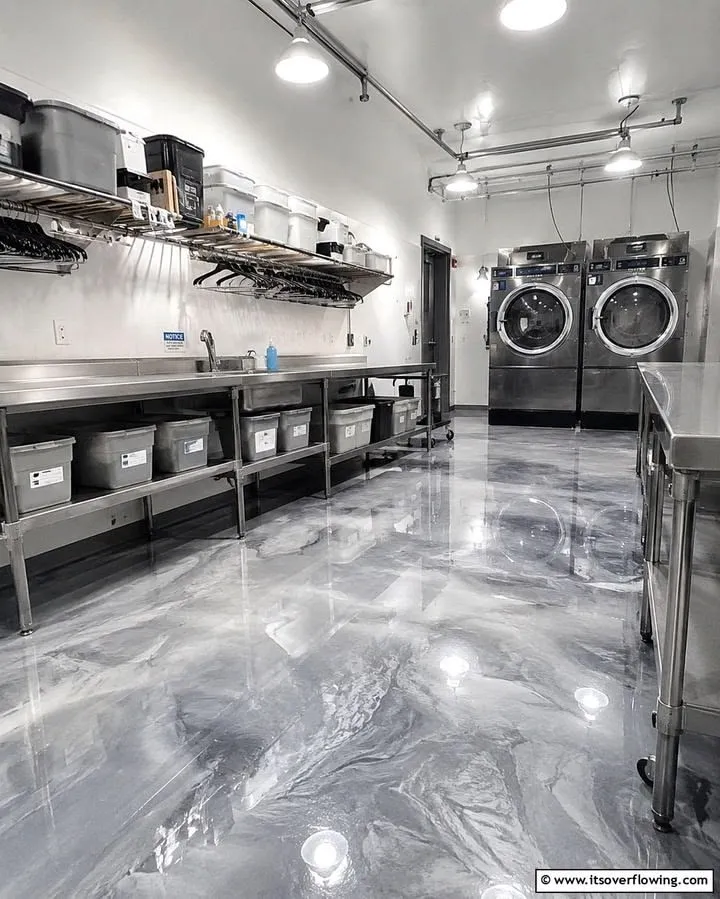
Laundry rooms rarely attract the same renovation attention as kitchens, yet they handle a steady mix of water, detergents, baskets, and appliances. They may also collect grit and wet footwear from nearby entrances. A well-chosen garage flooring charleston system may prompt homeowners to consider similar resin finishes for connected utility areas, but the conditions in a laundry room deserve their own assessment. Design starts with water management and appliance access.
Think About Water Before Appearance
A laundry room experiences occasional splashes and sometimes unexpected leaks. A seamless coating can simplify everyday cleanup when installed over suitable concrete, but it should not be treated as a waterproofing solution for a defective building. Hoses and drains still need attention.
Before selecting a finish, look for dampness near appliances and inspect any existing cracks. Ask whether water has previously reached adjoining rooms or collected behind machines. Addressing the source of recurring moisture is more important than choosing an attractive color to hide marks.
Plan Around Heavy Appliances
Washers and dryers create concentrated loads and must remain serviceable after a flooring upgrade. Moving them also exposes areas where lint, detergent residue, or old adhesive may have collected. Installers need access to the entire slab, including corners that are normally hidden by equipment.
Consider clearance, hoses, and protective pads. The coating must suit household use. Avoid trapping machines where plumbing or electrical components cannot be reached safely later.
Coordinate Traction and Easy Cleaning
Utility floors must be practical when someone carries a heavy basket or enters with wet shoes. A smooth, glossy finish may look appealing but can become slippery in the presence of water. Texture should therefore be discussed before the material is chosen.
Homeowners researching garage floor coating charleston sc finishes may encounter decorative flake systems with a clear polyaspartic topcoat. Similar design principles can inform a laundry-room discussion, although the precise product must be approved for that location. Consider how texture affects mopping, rather than assuming the roughest finish is always best.
Choose the Details That Matter Daily
Many laundry renovations focus on cabinets and wall color, leaving the floor as an afterthought. Yet the floor must work with drainage points, door thresholds, storage shelves, and appliance footprints. A checklist helps.
Review these features before work begins:
-
The route of water during a small spill.
-
Access to drains and plumbing shutoff valves.
-
Traction where wet footwear is common.
-
Appliance weight and protective feet.
-
The finish near adjoining rooms and thresholds.
-
Cleaning products used in the household.
These choices shape daily performance.
Prepare the Concrete Carefully
A durable epoxy system depends on concrete that can support it. Old floor paint, adhesive residue, dirt, and weak surface material may interfere with bonding. Professional diamond grinding can create an appropriate surface profile; damaged areas may need compatible repairs before coating.
Charleston’s damp conditions make site-specific moisture assessment worthwhile when warning signs exist. That does not mean every slab needs the same primer. A contractor should explain what the inspection found and why each preparation step belongs in the project scope.
Schedule the Work Around Household Routines
Removing laundry appliances temporarily affects daily life. Plan when clothing can be washed elsewhere and ensure family members can reach other rooms without crossing the work area. Consider the needs of pets and children when coating materials are being applied.
Ask the installer about preparation, application, ventilation, and curing. A surface that looks dry may not be ready for appliance movement. Following written instructions helps prevent early scratches or damage to the protective finish during reinstallation.
Keep the Space Serviceable Afterwards
Regular sweeping removes grit that can scratch decorative coatings, especially where a utility door opens toward the garden. Wipe spills promptly using products approved for the installed system. Check appliance connections periodically rather than relying on the floor to contain a serious leak.
Leave practical access around machines for cleaning and inspection. Protective feet can help reduce concentrated wear, and maintenance instructions should be stored with appliance information. The best renovation is one that remains easy to live with, not merely attractive at handover.
Conclusion
A laundry-room floor should support water management, appliance access, safe movement, and straightforward cleaning. Decorative epoxy can be worth considering where the concrete and product specification are suitable, but it cannot replace proper plumbing and drainage. Homeowners in Charleston and nearby communities can explore residential resin flooring options through carolinaflooringspecialists.com while planning a practical utility-space upgrade.