For trade businesses and physically active workplaces, clothing is subjected to conditions that ordinary casual garments rarely experience. Employees may kneel, climb, carry tools, work around rough surfaces and move between indoor and outdoor environments. Choosing durable workwear clothing can therefore help employers manage both everyday practicality and longer-term uniform costs.
Replacement expenses do not come only from the price of a new shirt or pair of trousers. Every unexpected replacement can involve administration, ordering, decoration and time spent ensuring employees have the right garment. A well-planned wardrobe can help reduce this disruption.
Think About Cost Per Wear
Purchase price is easy to compare, but it does not tell the complete story.
Suppose one garment is cheaper but needs to be replaced frequently. Another costs more initially but remains usable for longer. The second option may provide better value across its useful life.
Businesses should consider:
-
Purchase price
-
Expected frequency of wear
-
Washing frequency
-
Type of physical work
-
Replacement rate
-
Branding cost
-
Administrative cost of reordering
This broader approach gives a clearer picture of value.
Identify Where Garments Usually Fail
Before changing suppliers or styles, look at your current clothing.
Where does damage occur?
Common wear areas include:
-
Knees
-
Elbows
-
Pocket edges
-
Crotch seams
-
Shoulder seams
-
Collars
-
Zips
-
Buttons
Patterns can reveal whether garments are unsuitable for the job.
For example, repeated pocket damage may indicate that workers need stronger tool storage. Constant seam failures may point to sizing or mobility issues.
Fabric Weight Is Only One Factor
It is easy to assume that heavier automatically means stronger.
Fabric weight can matter, but construction, fibre composition and garment design also influence durability.
A work shirt should provide enough strength for its intended environment while remaining comfortable enough for employees to wear all day.
Excessively heavy clothing can become uncomfortable in warmer conditions, particularly for people performing strenuous tasks.
Reinforcement Can Make a Difference
Purpose-built trade garments may include stronger construction in areas that experience frequent stress.
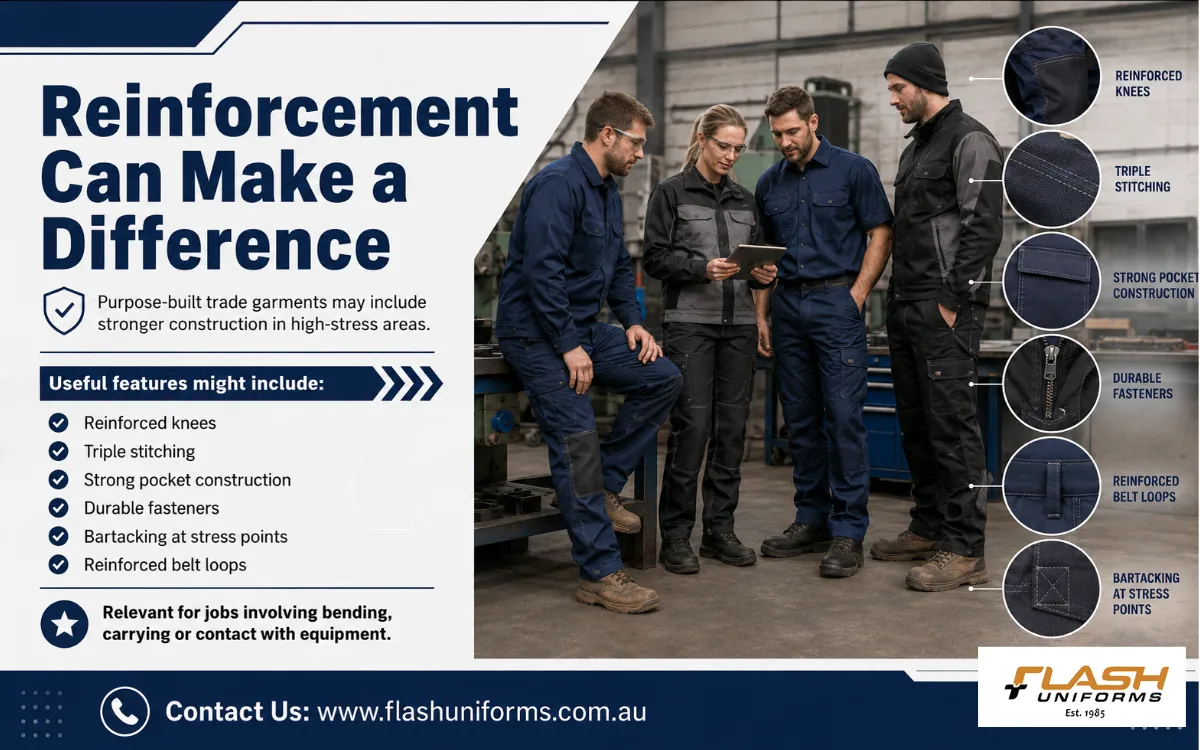
Depending on the role, useful features might include:
-
Reinforced knees
-
Triple stitching
-
Strong pocket construction
-
Durable fasteners
-
Bartacking at stress points
-
Reinforced belt loops
These details can be particularly relevant for workers whose jobs involve repeated bending, carrying or contact with equipment.
Look at Established Trade Clothing Options
Businesses comparing rugged garments can explore Hard Yakka Workwear alongside other options suited to practical working environments.
The most suitable choice should reflect the specific tasks employees perform rather than selecting a garment based solely on brand recognition.
Compare Similar Products Carefully
When assessing two similar garments, compare:
-
Fabric construction
-
Reinforcement
-
Pocket layout
-
Range of movement
-
Fit
-
Care requirements
-
Seasonal suitability
-
Branding options
This makes purchasing more systematic.
Fit Influences How Long Clothing Lasts
A garment that is too tight places additional strain on seams when employees bend or reach.
One that is excessively loose may snag or rub against surfaces.
Correct sizing allows the garment to move with the employee rather than constantly resisting movement.
Offering suitable fit options can therefore contribute to comfort as well as durability.
Give Workers Enough Garments to Rotate
Even durable clothing will wear quickly if one item is used continuously.
Providing an appropriate allocation allows employees to rotate garments between working days and washing cycles.
The ideal quantity depends on:
-
Number of weekly shifts
-
Washing access
-
Workplace dirt levels
-
Seasonal requirements
-
Employee role
A team working in dirty conditions may require a larger rotation than office-based employees.
Washing Practices Matter
Incorrect washing can shorten garment life.
Excessive heat, inappropriate chemicals or unsuitable drying methods may affect some fabrics and decoration.
Employees should follow the garment care label.
Businesses using branded clothing should also provide any decoration-specific instructions.
A short care guide included with new uniforms can reduce avoidable damage.
Standardise Core Products
If every employee uses a different work shirt or trouser, replacements can become complicated.
Standardising a core range creates several advantages.
It can:
-
Simplify ordering
-
Improve visual consistency
-
Make onboarding easier
-
Reduce decision-making
-
Keep branding specifications consistent
Different roles can still use different garments, but each role should ideally have an approved list.
Store Artwork and Branding Specifications
A durable uniform program should also have a durable branding process.
Keep copies of:
-
Logo artwork
-
Approved logo colours
-
Embroidery details
-
Print sizes
-
Standard positions
-
Previous order information
This prevents every replacement order from becoming a new design project.
Monitor Replacement Frequency
Track how often different garments are replaced.
If a particular item performs poorly, replacement data provides evidence for changing it.
You might discover, for example, that one pair of trousers lasts considerably longer than another under similar conditions.
Over time, these observations can help the business build a more reliable product list.
Seasonal Clothing Helps Protect Core Garments
Outer layers can also extend the usefulness of everyday clothing.
Providing suitable jackets, hoodies or vests can prevent employees from wearing personal outerwear over company garments.
It also means the core shirt does not need to provide all the warmth or weather protection by itself.
A layered system is more adaptable across the year.
Don’t Sacrifice Employee Comfort
Durability means little if workers dislike the garment.
Uncomfortable clothing may result in employees wearing alternative garments, rolling sleeves excessively or modifying how the clothing is used.
During trials, ask workers about:
-
Heat
-
Mobility
-
Pocket placement
-
Waist comfort
-
Sleeve movement
-
Fabric feel
Practical employee feedback can help identify the most sustainable choice.
Why Choose Flash Uniforms?
Flash Uniforms gives Australian businesses access to workplace apparel across multiple industries and recognised workwear brands. Companies can compare shirts, trousers, shorts, jackets and other garments for different team requirements while incorporating custom branding where needed. This broad selection can help businesses create consistent workwear programs without relying on the same garment for every role or workplace condition.
Final Thoughts
Reducing replacement costs is not simply about finding the strongest garment available.
It requires a combination of appropriate fabric, thoughtful construction, correct fit, suitable garment allocation and proper care.
Businesses should monitor where clothing fails and use that information to improve future purchasing decisions.
A structured approach to workwear clothing can reduce unnecessary replacements while giving crews garments that are comfortable enough for everyday use.
When durability and practicality are considered together, workwear becomes an operational investment rather than a recurring frustration.